Intel “DZ77GA-70K” Z77 Ivy Bridge motherboard pictured

As we know from the last couple of generations of Intel chipsets, Intel likes to make its own motherboards. Z77 will bring no exceptions, The Intel DZ77FA-70K is an LGA 1155 Z77 based motherboard.

CES 2012 Gaming Case Line-up

Going by Thermaltake's official spec sheet, the company has packed a powerful cooling system into an otherwise aesthetically superior case.

Asrock Z77 Extreme6 Socket 1155 Motherboard

Well the time has come. It is like Christmas time for many. Santa has delivered a brand new toy. In this case it is Christmas in April. Santa is Intel. And the elves are every motherboard manufacturer on the planet. The gifts contain motherboards with the brand new Panther Point Z77 chipset. Definitely just what the kiddies have been waiting for..

G.SKILL Memory Delivers the Fastest DDR3 Frequency Ever!

On 27th February 2012, the highest DDR3 memory frequency record was smashed again by the well-known Swiss overclocker, Christian Ney. Using G.SKILL extreme RipjawsZ memory kit, Christian Ney has achieved the astonishing score of DDR3 3736MHz with 4GB high capacity memory stick.

Asus P8Z77-V Deluxe Intel Ivy Bridge Motherboard Starts Selling in China

With one month to go until the official release of the Intel 7-series chipset family, a Chinese online store has listed Asus’ upcoming P8Z77-V Deluxe motherboard for Ivy Bridge processors with pricing being set at 2,499 RMB ($396 US).

Showing posts with label Tablet. Show all posts

Thursday, August 30, 2012

Samsung ATIV S & Galaxy Note 2 Windows 8 Powered Smartphone

Samsung announced two new smartphones, the Galaxy Note 2 and the ATIV S, during its press conference at IFA in Berlin Wednesday. The Galaxy Note 2 is a second take on its massive phablet and the ATIV S bears the distinction of being the first Windows Phone 8 device announced.

The original Galaxy Note may have shipped more than 10 million units worldwide, but it was far from a success in the U.S. Perhaps the Galaxy Note 2 will change that. It's superior in just about every way.

The most important element of the Note 2 is that Samsung updated the design to match that of its sexy Galaxy S III. The GSIII is one of the best phones Samsung has produced, and the Note 2 looks like it may be as attractive. The original Note was a bit utilitarian in appearance.

Samsung chose to alter the screen dimensions in a positive way. The diagonal measurement has been bumped from 5.3 inches to 5.5, but the pixels have been changed to 1280 x 720, giving it a 16:9 aspect ratio. This let Samsung make the Note 2 a bit narrower than it otherwise might have been. Narrower phones are easier to hold.

Other speeds and feeds have been improved as well. The Note 2 has a quad-core processor, an 8-megapixel camera, more storage options, and better radio configurations. Samsung also updated the S Pen software to make it more useful. The S Pen, after all, is the most unique feature of the device.

[ Trade-in sites see a spike in Samsung listings. Are Consumers Dumping Samsung Smartphones? ]

All these improvements make for a much better device. Samsung said the device will reach the U.S later this year (probably from AT&T or T-Mobile). Those looking for something altogether different from the iPhone 5 will have a good option with the Note 2.

Samsung surprised everyone by announcing the first Windows Phone 8 device. Nokia was expected to earn that distinction next week during a press conference it is holding with Microsoft. Samsung beat it to the punch, though it may not matter.

From a spec perspective, the ATIV S is a winner. It adds a number of features that previous generations of Windows Phones weren't able to offer. These include a dual-core processor, an HD display, removable memory, and so on. The design is gorgeous, it's made out of brushed aluminum. Metallic materials are something that many Samsung devices lack. Metal adds an element of quality and class that simply can't be achieved with plastics.

Samsung didn't say whether the ATIV S might reach the U.S., and more importantly, Samsung didn't say anything about what Windows Phone 8 can do.

Nokia and Microsoft will surely give us a very good look at everything Windows Phone 8 has to offer during their event scheduled for September 5. Without knowing how the ATIV S can put all those specs to use, it's somewhat of a hollow announcement. Nokia has already taken to the Web to call the ATIV S a "warm up" for next week's event.

Until then, the ATIV S is the only Windows Phone 8 device to talk about.

Source: http://www.informationweek.com

Thursday, August 16, 2012

Motion F5t And C5t Ivy Bridge Tablet PCs

If you are looking for a tablet with a little bit more power, you might be interested in the new line of rugged Tablet PCs unveiled by Motion this week.

The new Motion PC Tablets come in the form of the F5t and C5t, which can be equipped with a range of processing power from the Ivy Bridge i3, i5 or i7 third-gen Intel processor ranges.

Both tablets have been designed and built to run Windows operating system, and also feature Motion’s hot-swap battery technology for extended, uninterrupted productivity in the field, with each battery offering up to 6 hours to use.

“Motion’s latest tablets with the 3rd generation Intel Core vPro processors are designed to meet the needs of mobile workforces by offering optimized battery life and the high performance these workers demand to enhance productivity anytime anywhere,” said Dan Russell, director of business client platforms and solutions marketing at Intel. “Further, the F5t and C5t Tablet PCs enable both the business user and IT managers to compute with confidence through a combination of Intel based security paired with exciting designs and easy automation.”

The new Motion F5t and C5t PC tablets start at $2,236 and rise depending on the configuration you require, more details are available over on the Motion website F5t and C5t.

Sunday, July 29, 2012

Entry Level Window 8 Surface Tablet

There are many speculations floating around the web about the upcoming Windows 8 operating system as well as the devices which it will run on.A month ago Microsoft announced the Surface Tablets which will feature Windows 8/WinRT operating system.

Though the pricing of the device is yet to be officially announced by the software giant,many of the blogs and sites are speculating their figures for the upcoming tablet.Yesterday one of the Swedish online store reported about an entry level Surface Tablet pricing to be around $1150 for the 32GB version of ARM based Surface Tablet.

But as reported earlier by Techie-Buzz Author Paul Paliath,who reached out to the Webhallen.The site then cleared the air on the pricing which they showcased for Surface Tablets,saying that the existing pricing has nothing to do with the final pricing of the product,they set the initial pricing high for the pre orders and that when the official pricing comes out those who have pre ordered the Surface Tablets will get the prices adjusted to the actual costs that time.

So this statement from the site should now clear all the doubts about the pricing of Surface Tablets,at least what we do know that the entry level ARM based Surface Tablets won’t cost your pocket a $1000,but you might see a higher price range for the Intel based Surface tablets running on Windows 8 Pro.

Friday, July 06, 2012

Microsoft Surface Pro vs Surface RT tablet

Both are expected to be great tabs and will attract millions of customers. Here we compare Microsoft Surface RT tablet Vs Surface Pro tablet and their specs. Release date is yet to be announced for both the tabs

Microsoft has recently showcased a pair of Windows-based tablets; the Surface RT and Surface Pro. Designed to compete with Apple iPad, Google Nexus 7 and other key tablets, the new Windows tablets are expected to come out of cover later this year. The Surface RT is an ARM-based variant of the tablet, which will run on Windows RT, the special ARM version of the firm’s upcoming operating system, Windows 8. Meanwhile, the Surface Pro will come with Intel chips and will have the original PC version of the firmware. Amazingly, both the tablets will sport 10.6-inch displays. Many have defined them as hybrids of tablets and Ultrabooks rather than mere tablet PCs. Here is a comparison between the Surface RT for Windows RT and Surface Pro for Windows Pro.

Form factor
There is little difference between the 10.6-inch tablets in form factor. The Windows RT-based Surface RT is thinner at 9.3mm, whereas the Surface Pro for Windows 8 Pro is slightly thicker at 14mm. The latter is also a bit heavier than its sibling. Both the tablets come with identical form factor as they feature a very squared-off and angular slab, which is developed from magnesium liquidmetal. Each tablet touts a PVD layering to the metal, which is a kind of finishing treatment to the high-quality wristwatches. As a whole, though a bit larger than the regular tablets, Surface RT and Surface Pro are handy and highly portable.

Display screen
In fact, not much is known about the displays of the tablets. Microsoft has revealed that the tablets will have 10.6-inch LCDs with Corning’s Gorilla Glass and Microsoft’s own ClearType technology. And the Windows 8 Pro tablet will tout a higher 1080p resolution, while the Windows RT version will have 720p resolution. That is, the Surface Pro will have a sharper and clearer display than Surface Pro.

Storage
The Redmond software giant has revealed that the Surface tablet for Windows RT will come with two memory options; 32GB and 64GB. Regarding the Surface Pro, the company has just mentioned that it would have higher storage, possibly 64GB and 128GB. Both the tablets are hoped to come with microSD slots for memory cards up to 32GB. But we have no idea about the built-in RAM of the tablets. The Surface RT may come with only 1GB of RAM; but the Surface Pro, being an Ultrabook rather than a tablet, might have 2GB of RAM.

Processor
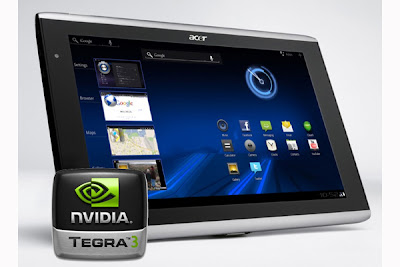
This is the thing that fairly distinguishes the tablets. The Surface RT is meant for an ARM Cortex based CPU, which might be Nvidia’s much-touted Tegra 3 quad core chip. Well, the tablet will have a Tegra 3 quad core processor on ARM Cortex-A9 architecture that will probably clock at 1.5GHz. Likely, the machine will get its graphical performance from a ULP GeForce GPU.

The highly professional Windows 8 Pro model is designed to run on Intel’s third generation Ivy Bridge Core i5 architecture. Well, the machine will offer the specs of an Ultrabooks thanks to the high-power processor. The tablet is a bit bigger as it requires a large case to include laptop-style cooling vents. Needless to mention, the Surface Pro is to have much more power than the Surface RT.

Operating System
Operating system is another significant area where the Surface tablets differ. The Surface RT, as noted above, will run on Windows RT, the special version of the OS for ARM-based devices. The Surface Pro, in the meanwhile, will feature Windows 8, the professional version of the operating system.

Windows RT or Windows Runtime is designed to run Metro style apps developed using the Windows Runtime standard. Surface RT users can download apps for the device from Windows Store, which is an upcoming ultimate app store for all Windows 8-based gadgets including tablets, laptops and others. On the other hand, Windows 8 Pro will support all professional apps that you can run on your PCs, laptops, servers and others.

Conclusion – Verdict
Microsoft has designed the Surface tablets simply aiming at two types of customers. So there is no chance for a competition between the Surface RT and Surface Pro. However, being two smart tablets on two variants of Windows 8, the Surface tablets will fulfil the requirements of all kinds of customers. Users can choose a Surface tablet based on its processor speed, software compatibility and other aspects.

Source: novnews

Tuesday, June 19, 2012

Microsoft Launch Windows 8 Pro with Intel Powered Ivy Bridge Tablet

Microsoft Launch Windows 8 Pro with Intel Powered Ivy Bridge TabletMicrosoft has introduced a Windows 8-based 9.5mm thick "Surface" tablet with a USB 2.0 port, rear/front cameras, a built-in stand (on rear only 0.7mm thick), HDMI output, and a magnetic cover.
The tablet weighs only 0.680 kilogram and comes with an Ivy Bridge Core i5 processor or an ARM processor.

Under the bonnett is Microsoft Office, PDF markup apps and digital ink support is also built in.

The tablet has a 10.6 inch high-definition touchscreen and front and rear facing cameras, which all fit into a 9.3 millimeter, 1.5-pound frame.

But Surface also brings some new innovations to the tablet space. The device's cover, for instance, flips down to become a full keyboard. It features a rigid case built from magnesium, a pen that clicks into the tablet and a built-in kickstand.

Microsoft is recycling -- or extending -- a brand name it has used before. The first "Microsoft Surface" device, which began shipping in in 2008, was a giant touchscreen computer aimed at retailers and other commercial customers.

Microsoft's Surface tablet will first be available on a version of Windows 8 called Windows RT. That operating system will run on microchips designed by ARM (ARMH), which are inside 95% of the world's smartphones and tablets. Another version of Surface will be designed for the fuller Windows 8 operating system, which will run on Intel chips.

Microsoft didn't give specifics, but the company said the Windows RT version will be available sometime in the last quarter in 32- and 64-gigabyte versions, and will be priced "comparably" to other tablets on the market.

The full Windows 8 version will be available three months later in 64- and 128-GB versions. Microsoft plans to set its price point in the same zone as ultrabooks, which typically run around $1,000.

Source: Smarthouse

Thursday, June 07, 2012

Wikipad World's First Gaming Tablet Using Nvidia Tegra 3 Quad Core Chip

Wikipad World's First Gaming Tablet Using Nvidia Tegra 3 Quad Core ChipWednesday during E3 2012, Wikipad said it has selected Nvidia's Tegra 3 quad-core SoC as the brains behind the world's first gaming tablet.

The portable gaming gadget is currently on display at select Nvidia and Gaikai locations at the Los Angeles Convention Center. It features Android 4.0 "Ice Cream Sandwich," a 10.1-inch screen, a thickness of 8.6-mm, a gamepad-like attachment, and the preloaded Nvidia TegraZone which offers games optimized for Tegra and game controller support.

"By adding Nvidia’s Tegra 3 processor to the Wikipad, we’ve combined the best of tablet and console gaming into one device that fits in the palms of your hands," said Fraser Townley, President of Sales for Wikipad. "Tegra 3 opens up incredible content options including optimized mobile games and console-quality streaming games through new cloud gaming services."

The Wikipad tablet first made its appearance back in January during CES 2012. Still in a prototype stage, it was touted as the first glasses-free 3D Android 4.0-based tablet with an attachable video game controller. Analog sticks resided on each side, and a D-pad was mounted on the left and four action buttons seated to the right. A set of speakers were embedded into the controller at the bottom and shoulder triggers at the top.

Then last month Gaikai announced that it teamed up with Wikipad to help produce the upcoming tablet. Gaikai will provide a client that will be integrated into the tablet's OS, streaming console-quality titles right to the user's fingertips. Details regarding the client are slim for the moment, but it's assumed that users will be able to purchase individual games from a Wikipad storefront -- whether these games can be played on other devices is unknown.

The tablet is supposedly capable of glasses-free 3D and 1080p playback including H.264, VC1, VOB, ISO, M2TS, and FLV. Other features include HDMI and USB 2.0 ports, front and rear cameras, 8 GB of on-board storage and an SD card slot for an additional 64 GB of space. Wi-Fi will be the connection of choice although a USB 2.0 port indicates that an optional 3G module may be available.

The Wikipad launch date is set for the end of the 3rd Quarter, 2012 through major retailers worldwide. Will this tablet be successful and take gamers by storm, or become another Xperia PLAY?


Source: Tomshardware

Saturday, May 26, 2012

Dell Windows 8 tablet config seems weak

Dell Windows 8 tablet config seems weakDetails have leaked of what we can expect from the first generation Dell Windows 8 tablet, and the specs don't seem adequate.

Some details are beginning to emerge of what we can expect from the first generation of Intel-based Windows 8 tablets. If the leaked specs of the Dell Windows 8 tablet are any indication, though, the devices may be severely underwhelming.

According to information shared by Neowin, the upcoming Dell tablet will sport a dual-core Intel Cloverleaf processor, 2GB of RAM, and 128GB of SSD storage. The RAM and storage capacity are larger than most of the tablets currently available, but this is an Intel x86 device, not an ARM-based tablet, so it's not as impressive as it sounds.

Forget for a minute that it's a tablet. Consider the hardware in your current Windows desktop or laptop. Most systems have quad-core processors and at least 4GB of RAM--and that's just enough to run smoothly. Many high-end desktops have processors with six or more cores, and 12GB or even 16GB of RAM.

To be fair, many entry-level laptops have specs similar to the Dell Windows 8 tablet--dual-core processors and 2GB of RAM--but they also cost only $300 or so. When someone buys a bargain laptop with hardware that just meets the minimum requirements to run Windows, they expect that performance will suffer.

Will users be willing to pay a premium to get that same mediocre system in tablet form? While there is no pricing yet announced for these Windows 8 tablets, it seems relatively safe to assume they'll cost more than $300. In fact, I won't be surprised if they come in somewhere between $700 and $1000.

Windows 8 RT tablets will probably have hardware specs and capabilities closer to existing tablets like the Apple iPad. Unfortunately, Windows 8 RT can't run traditional Windows software, and won't be able to connect to a Windows network domain, so it doesn't offer a very compelling proposition. Unless Windows 8 RT tablets are significantly cheaper than the iPad or Android counterparts, it may be tough for the devices to gain traction.

There are still more questions than answers, and we'll have to wait and see when the Windows 8 tablets hit the shelves. But, based on current and previous versions of the Windows operating system I am less than enthusiastic about the prospect of running Windows in 2GB of RAM on a dual-core processor.

A lot will depend on Microsoft, and even more will depend on the hardware vendors package the OS in. Even with a solid OS and tablet hardware, the cost of Windows 8 tablets could be a fatal flaw as well.


Source: Arnnet

Thursday, April 26, 2012

Datawind launches tablet PC at Rs 3,000

Datawind launches tablet PC at Rs 3,000UK-based Datawind which had bagged a contract for supplying low-cost tablet 'Aakash' to the government, today launched two such computing devices in the price range of Rs 3,000-4,000, considered to be amongst the cheapest in the market.

Datawind, which had run into problems with the IIT Rajasthan and its sub-contractor Quad Electronics for the much-touted 'Aakash' claimed that it has already done 30 lakh bookings for the new tablets launched in the commercial market.

"We will first deliver pre-bookings, which are over 30 lakh ," Datawind CEO Suneet Singh Tuli told reporters here.

He said both the models launched are embedded GPRS modems along with WiFi connectivity. The tablets have seven inch screens which support Android 2.3 operating system, a8-800 Mhz processor and 256 mb RAM.

Tuli did not agree with the perception that the tablet market in India was not growing.

"We are getting around 8,000 orders...". When asked whether all these bookings are genuine purchase orders, since no advance payment is required,he said "conversion (from pre-to-firm bookings) is 88 per cent".

Datawind had hit headlines in October last year when it unveiled 'Aakash', touted as the world's cheapest tablet to be supplied to the HRD Ministry at Rs 2276 a piece.

The government, in turn, had to give about one lakh of these tablets to the students at subsidised price Rs 1100-1200 each.

However, the IIT-Rajasthan, the nodal agency for the 'Aakash' project, had rejected the tablet for not meeting performance criteria and the project had to be shifted to IIT Bombay.

"We will provide (upgraded) Aakash to the government for approval and after getting it, we will then deliver the one lakh tablets," Tuli added.

Telecom Minister Kapil Sibal had recently said that the upgraded version would be available in May.

For the tablets launched commercially today, Datawind has tied up with mobile service provider Aircel for voice and data services, which is offering Rs 100 unlimited plan for internet usage.


Saturday, April 14, 2012

Intel Reveals Hardware Specs List for Windows 8 Tablets

Intel has released a set of Windows 8 tablet specs featuring a 10-inch model and an 11-inch model with a physical keyboard.

CNET reports that Intel sported a list of specs for a Windows 8 tablet during IDF 2012 Beijing. It included a dual-core Atom Z2760 "Clover Trail" SoC capable of "burst mode" which provides quick bursts of performance when needed. The SoC will also feature HyperThreading which will allow the dual-core SoC to handle four threads.

Based on the spec list, Intel is seemingly trying to set a standard hardware set definition much like it did with the Ultrabook form factor. Except here Intel is pushing for two tablet sizes: one measuring 10-inches, and another containing a 11-inch screen and a physical keyboard.

On a basic level, the tablets will feature 9+ hours of battery life, 3G/4G connectivity, connected standby mode, a thickness of less than 9-mm and a weight of less than 1.5 pounds. A full battery charge should also last around 30 days if the tablet remains in standby mode.

On the entertainment and gaming front, the tablets will support Intel Wireless Display, Advanced Imaging, Intel Insider, Compute Continuum, Wi Fi Direct and NFC technology. On the business front, it will have backward app compatibility, domain join, encryption and security and manageability features.

Tablets based on Intel's spec list are expected to ship with the sparkly new Windows 8 once the OS goes retail later this year. The trick for manufacturers will be how to stand out against the competition using the same list of specs. Yet if they can do it with Ultrabooks, they can do it with tablets. As CNET states, "Intel is pretty adept at getting its satellite of customers and partners to make things happen."

Source:Tomshardware

Sunday, April 08, 2012

NVIDIA Tegra 4 roadmap leaks with 2.0 GHz quad-core

NVIDIA’s current flagship Tegra 3 quad-core processor is the current king of the hill, getting all the attention as of late. While we’ve been comparing it to other offerings from the competition a new slide has leaked today possibly showing off their new Tegra 4 coming later this year. The current Tegra 3 is still new, but they’ve already got the next big thing in the works.

NVIDIA’s CEO himself has said we can expect a new Tegra line every year, and that appears to be the case according to the leaked slide provided by VR-Zone. What you see below is possibly a roadmap showing what’s in store from the folks in green. With 2.0 GHz quad-core processors, LTE and more on the way.

With Tegra 3 still being in its infancy we should probably take this with a grain of salt, but the specs and timeline seems pretty accurate and highly possible. The current Tegra 3 is made up of four A9 processors and it only makes sense for the next iteration to be the A15, similar to the Qualcomm S4 and Samsung’s upcoming Exynos.

While NVIDIA’s plans for late 2012 and early 2013 is still a mystery and will not be official until they release the details themselves, this roadmap could be giving us an early look. Take notice this shows LTE versions coming pretty late in the game. We hope they have something sooner than that but you never know. We’ll let you be the judge.

Source:Engadget

Wednesday, April 04, 2012

The Future of PC gaming: It's called Project Fiona


Razer’s Latest Project is a Gaming PC Trapped in the Body of a Tablet

While it may look like your average Android tablet adorned with a pair of button-festooned handlebars, beneath the shimmering screen of Razer's Project Fiona lurks the beating heart of a high-powered gaming PC. Are we looking at the future of portable gaming?

Project Fiona's debut today as a proof-of-concept design at this year's Consumer Electronics Show in Las Vegas is part of Razer's calculated strategy to stand out from the annual parade of recolored smart phones and Android tablets. Last year they drew the attention of gamers with the Razer Switchblade, essential a handheld gaming PC. While elements of the Switchblade later appeared in the design for the company's $2,800 Razer Blade gaming laptop, the Switchblade itself never surfaced as an actual product.

In a pre-CES 2012 interview last week Razer CEO and creative director Min-Liang Tan told me that while the Project Fiona pictured here is merely a proof-of-concept, the company plans on shipping an actual product by the end of the year, and the product they plan on shipping is far more than a tablet PC with handlebars.

"I love my iPad," Min-Liang Tan told me as he began explaining Project Fiona. "It's great for Words with Friends or Plants Vs. Zombies, but it's pretty much only good for casual gaming. You get a high score, you blast it out to your friends and say 'Hey, can you beat my Bejeweled score?' That's tablet gaming."

PC gaming, Tan explained, is quite different. It's evolved a great deal since the days he and his brother would sit side-by-side at a computer keyboard playing Top Gun. "It's very networked; very visceral; very real-time."

Therein lies the impetus behind Project Fiona. "We want to bring that sort of virtual social engagement back to a face-to-face experience. We want to get three or four guys sitting on a couch playing head-to-head against each other," Tan said.

It's a noble goal, but why not simply utilize a standard tablet PC? Why create a special dedicated gaming machine?

"PC gaming is impossible on a tablet," said Tan. "We looked at that, focused on that and now Project Fiona is the only tablet in the world designed specifically for PC gaming."

What sets Project Fiona apart from other tablet computers?

For one, the system is powered by the latest generation of Intel's Core i7 processors, making it quite the powerful little machine. More importantly it helps ensure that any PC-native game will work with Project Fiona right out of the box without any tweaking, or as Tan put it, "It's got the largest library of gaming content in the world."

It's a bold statement, but there's a certain truth to it. Project Fiona is indeed a full-fledged PC, and while the full final specs are yet to be determined, the Intel processor is a good start. When the final project ships at the end of this year it will be running a full version of the tablet-friendly Windows 8. Players will be able to load up their Steam library, download their favorite games, and go to town.

The "handlebars" on either side of the unit act just like plugging in a Wired Xbox controller would on the average PC. You've got thumb sticks, buttons, triggers — all the ingredients needed to play today's more console-friendly PC titles. And when a game requires a keyboard? That's where Project Fiona's hybrid interface comes into play.

By mixing a multi-touch screen and an accelerometer with a traditional game pad, Tan says game developers willing to take a little more time will be able to develop special features that take advantage of Project Miriam's unique design.

So how does it play?

Razer's Latest Project is a Gaming PC Trapped in the Body of a Tablet "It's a totally different experience," Tan said. "Usually you're holding a controller in your hand and looking up at the screen. Now it's in your face." That more visceral experience will be further enhanced by full THX-certified Dolby home theater sound (a first for tablet PCs) and integrated force feedback, which isn't a term you hear bandied about all that often anymore.

Again, Project Fiona is simply a proof-of-concept, but Razer is definitely bringing a Fiona-like product to market by the end of this year. The design may change, the handlebars may warp and change, but a Window 8 running PC gaming tablet will drop by the end of this year with a target MSRP of under $1,000.

"The whole point here is we want to create an experience where people having a rough day can take a quick break, play some PC games, shout at each other, and get back to work."

Source:Gizmodo

Razer’s Project Fiona tablet plays Skyrim on ultra-high settings


Razer’s Project Fiona gaming tablet is no joke. It’s been one of the most talked-about devices to come out of CES 2012, and — once released — it has the potential to be an industry pillar. Though it’s still merely a prototype, this bad boy looks like it isn’t far from prime time. Take this video, for example: here we see the dual-controller-wielding tablet running Skyrim. Oh, and did we mention that the game is being played on ultra-high settings?

As you’ll see in the video, it handles the visuals brilliantly. The framerate is choppy, but keep in mind that this is on ultra-high — the highest possible settings. We don’t know yet what graphics card is powering the prototype, but the mystery GPU and the Intel Core i7 Ivy Bridge processor are performing admirably. We don’t see it in the video, but the tablet will supposedly play Skyrim on “High” (the next level down) flawlessly.

Razer has produced one of the most innovative devices at CES with Project Fiona. The attached controllers on either side of the tablet take away the pesky requirement of using a touchscreen for tablet gaming, while retaining the handheld portability of tablets. That it will run Windows 8 is only a bonus: it will be instantly compatible with a legion of top-of-the-line games.

There are a few potential pitfalls with Razer’s tablet. Battery life is suspect; we’ve heard reps estimate that it will stay powered for two or three hours. That’s acceptable, but lengthy gaming sessions will require a power cable (greatly reducing the device’s portable appeal). Also, I can’t imagine that the device will support graphics card upgrades. For an investment that will probably cost at least $800-900, it doesn’t leave a lot of room for future-proofing in the rapidly-evolving world of PC gaming.

While much is still unknown about Razer’s upcoming tablet, the buzz that it has garnered at CES guarantees that we’ll eventually be seeing these on store shelves. Color me intrigued.

Source:The Geek

Tuesday, April 03, 2012

iPads could replace books in China school

Students in a Chinese school may soon carry iPads instead of books to their classrooms as the management is planning to allow the use of the gadget.

The Jinling High School in Nanjing city has already allowed three students to bring iPads to their classrooms on a trial basis once their new term begins in September.

The policy has been discussed extensively and will possibly be extended to all students, the management said.

The iPads can set students free from the burden of carrying school bags, said Xin Qihua, vice director of the school’s international department.

It can also improve interaction between the students and teachers who can ask questions through the device and review all answers from the students immediately, said Mr. Xin.

The gadget can also give students access to foreign educational resources, which will contribute to their preparation for the SAT, TOFEL and AP exams, Mr. Xin added.

It can also help save up to 90 per cent of their expenditures on teaching materials.

The measure was hailed by many young people. “I am so jealous. I have an iPad too, but I am not allowed to take it to the classroom,” said a blogger on Sina Weibo.

However, some expressed doubt. They worry that the gadget may spoil the students.

“Although it is worth trying, children who lack self-discipline may waste time in playing games,” Xinhua quoted another blogger as saying.

“The teacher has technical control over all the iPads, and students will be prevented from installing any games,” Meng Qun, a teacher at the school, as saying.

To lighten the load on students in primary and high schools, local governments have been pondering the idea sometime whether to allow students to use devices like laptops.

However, Yin Fei, professor with Nanjing Normal University, said: “It is a fallacy to reduce students’ burdens by introducing electronic devices.

“The excessive burden on students’ shoulders is not from the weight of school bags, but the flawed educational system itself.”

Micromax unveils tablet PC 'FunBook' at Rs 6,499, based on Ice Cream Sandwich OS

Mobile phone maker Micromax on Tuesday forayed into the burgeoning tablet PC market with its 'FunBook' priced at Rs 6,499.

The device, targetted specially at the education sector, will be manufactured in India at the company's manufacturing unit in Haridwar.

"We have a manufacturing capacity of one lakh units per month and we are already looking at increasing that number. That should give an idea to the kind of numbers we are looking at for the device," Micromax CEO Deepak Mehrotra told reporters.

The company would also undertake 360-degree marketing campaign for the product, which would see Micromax making "significant" investments in, Mehrotra said without divulging further details.

The seven-inch FunBook is based on the Android 4.0.3 Ice Cream Sandwich platform and has a 1.22 GHz processor, 0.3 MP VGA front camera, 4 GB internal memory, expandable upto 32GB.

The company has partnered with Pearson and Everonn to make educational content available on the tablet PC.

"Users need to just pay Rs 799 for educational content of a particular class and they can get access to the multimedia content from our partners," Mehrotra said adding that the partners would also help in taking the device to various educational institutions.

Micromax has joined companies like HCL Infosystems and WishTel, which have launched tablet PCs, targetted at the education sector. Following the government's low-cost Aakash device, these companies are tying up with educational organisations to deliver multimedia content to students.

Source:Economics Times

Monday, April 02, 2012

Budget-Priced Tablets with Tegra 3 CPU Due in 2012, Says Nvidia

Apple’s newest tablet computer, simply called the New iPad, has been available for purchase in most major markets for the past few weeks, and for the most part, it’s so far, so good.

Sales have been impressive, perhaps enough to ensure the Cupertino, CA tech giant’s continued dominance of the tablet market. But what about the budget tablet market, which is presently considered the most formidable threat against Apple’s iPad series?

According to Jen-Hsun Huang, CEO of Nvidia, there will be a few inexpensive tablets with the Tegra CPU coming in the summer of 2012.

For those who aren’t in the know, this is news that Apple shouldn’t be taking lightly, especially since Huang believes there will be a good chance these tablets will cost about $199 or so. If these tablets don’t eventually usurp Apple’s share of the market as a company, then they just might help Android as an operating system take over the lead from Apple’s iOS.

Indeed, it looks like there’s no better time for low-priced tablets to shine. The Amazon Kindle Fire, for instance, skyrocketed to second in tablet sales charts last year, boasting of a dirt-cheap $199 price tag and a wealth of unique features. Some analysts are, in fact, predicting budget tablets may have control of the tablet market in about two to three years time.

Additionally, Huang did mention that there is a chance the Tegra 3 CPU may be used on a Windows 8-powered tablet. The forthcoming Windows 8 operating system has also been pinpointed as a potential threat to iOS.

This should make for some fascinating possibilities, even as Tegra chips are exclusively used at the present on Android operating systems.

NVIDIA CEO suggests $199 Tegra 3 tablets in the summer


Always talkative NVIDIA CEO Jen-Hsun Huang is in the news yet again, this time telling the New York Times that his company's Tegra 3 hardware is incorporating enough cost saving that it could be in $199 Android tablets by this summer -- beating his previous $299 promise.

Beyond the tantalizing thought of value-priced tablets with the horsepower of the Transformer Prime (perfect for that rumored price subsidized, ASUS-built and Google-branded slate, right?) there's also a shout out Tegra-powered Windows 8 slates and Sony's unannounced VAIO Chromebook that popped through the FCC. The NYT suggests its T25 chip could stand for Tegra 2.5 with a debut planned for Google I/O in June -- we'll find out then if this is misguided line drawing or a very educated guess.

Source:engadget

Friday, March 16, 2012

Aakash 2 tablet features and configurations

The new Aakash 2 tablet is planned to release by feb 2012 with new features and configurations . The old configuration of the aakash 2 tablet is now sounds much for the users usablity.
Where the aakash tablet PC get hang frequently and also its overheated within 30 minutes of times. Unable to watch the you tube videos and unable to download the new apps in the andriod market.

All these feedback has made the proposal for aakash version 2 delivery. The new aakash 2 tablet has changed in the processor , Ram and camera features.


so the new aakash 2 tablet is changed its 366 MHZ processor to 700 MHZ , it willing to change the 256RAM to 1GB RAM where it will be more useful in the multitasking and browsing videos.


A new camera is also plan to place in the front side of the tablet. Lets welcome all the new aakash 2 tablet by the feb of 2012 with some more new features.

Preorder Now: Akash Tab